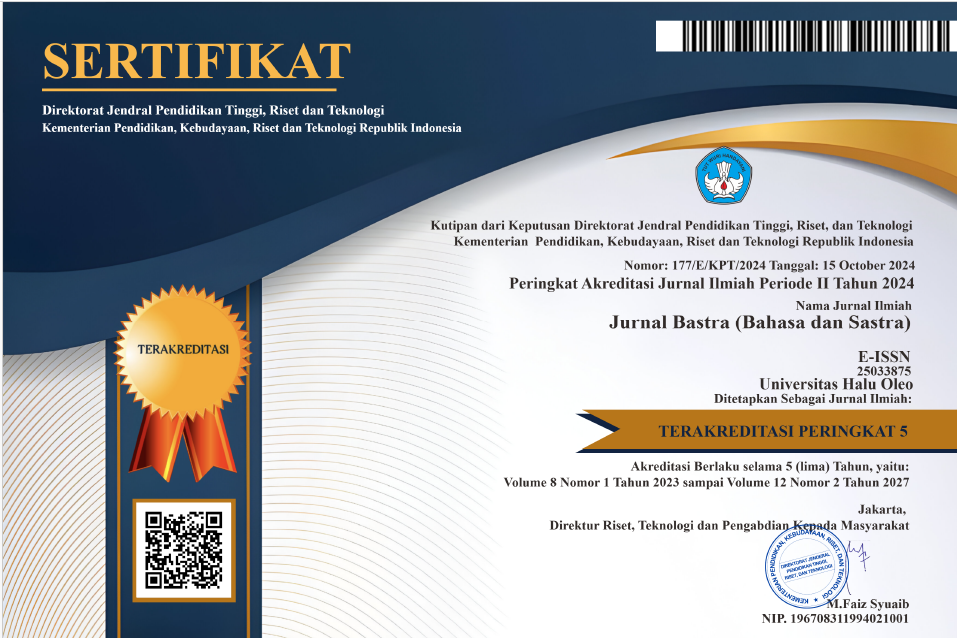
ACCREDITATION

□ Processing a paper takes at least 4—5 weeks (possibly longer) to get a status update. The status of the paper can be viewed on the registered account and will be informed.
□ The article has never been published in other media and does not contain elements of plagiarism.
□ The manuscript MUST be written according to the provided template using a word processing application (e.g., Microsoft Word, Open Office, etc.) in either DOC or DOCX format. Additionally, the file size should not exceed 1 MB.
□ The manuscript should be typed in TNR font, size 12 points. Titles should be written in 14-point bold font. Maintain single spacing throughout the document. Use F4-sized paper with margins set to 2,54 cm on all sides (right, left, top, and bottom).
□ The maximum number of paper pages is 15 pages and minimun 8 pages including references and tables.
□ References must be listed alphabetically and sequentially following the APA style, 7th edition. Ensure a minimum of 15 references are included, with at least 80% sourced from scholarly journals.
Article Template for Submissions
This journal permits the use of Artificial Intelligence (AI) technologies in the manuscript preparation process, provided that such use is conducted responsibly, transparently, and does not replace the primary role of the author in producing scholarly work.
AI may be used to support technical aspects of writing, such as improving grammar, refining sentence structure, translating text, organizing paragraphs, preparing preliminary summaries, or assisting authors in developing initial ideas. However, the scientific substance, originality of ideas, analysis, data interpretation, conclusions, and academic responsibility remain entirely with the author.
Authors must ensure that all manuscript content has been reviewed, verified, and adjusted in accordance with applicable scholarly standards. Information, references, data, quotations, or statements generated with the assistance of AI must not be used without proper verification against valid and reliable sources. AI tools cannot be listed as authors, as they do not bear academic, ethical, or legal responsibility for the content of the manuscript.
The use of AI is not considered a violation as long as it is not employed for data fabrication, manipulation of research findings, plagiarism, creation of false references, or concealment of contributions from other parties. If AI is used substantially in the writing process, authors are encouraged to include a brief statement regarding the nature of its use in the acknowledgements, methods section, or author’s note, depending on the type and structure of the manuscript.
Through this policy, the journal encourages the use of AI as a tool to support academic productivity, rather than as a substitute for scholarly integrity, accuracy, and authorial responsibility.
The authors declare that AI technology was used in a limited manner as a supporting tool for language editing, sentence refinement, and/or initial idea development. All manuscript content, including data, analysis, interpretation, references, and conclusions, has been reviewed and verified by the authors. Full responsibility for the academic substance and integrity of the manuscript remains with the authors.